Pipeforge + Fleetforge
Orchestration for Claude Code and Codex on a PostgreSQL MCP server, with Fleetforge as the coordinator layer across projects. The Education SaaS, OMS and ProfitOfExile all ship through them. Both are private tools I use daily, not products.
How it runs
Agent sessions run in four levels: coordinator (Fleetforge), supervisor, orchestrators and implementers. Questions escalate one level at a time, and a session hands its work to a fresh one before its context runs full.
That setup carried the first long run, in 09.2026: about four days across three projects, in two stretches. On the client system alone it landed 73 reviewed work items in about 56 active hours.
I pick the models with blind A/B tests on real work items, using hidden tests and blind cross-vendor judges. In 09.2026 Claude Opus 5.5 at low reasoning effort replaced GPT-6 Luna as implementer, at 2–8× the speed with equal results. GPT-6 Sol stayed as reviewer, so no model checks its own work.
Who checks what
- Before planning: an architecture review flags invariants and where new code should live. A security review joins when switched on.
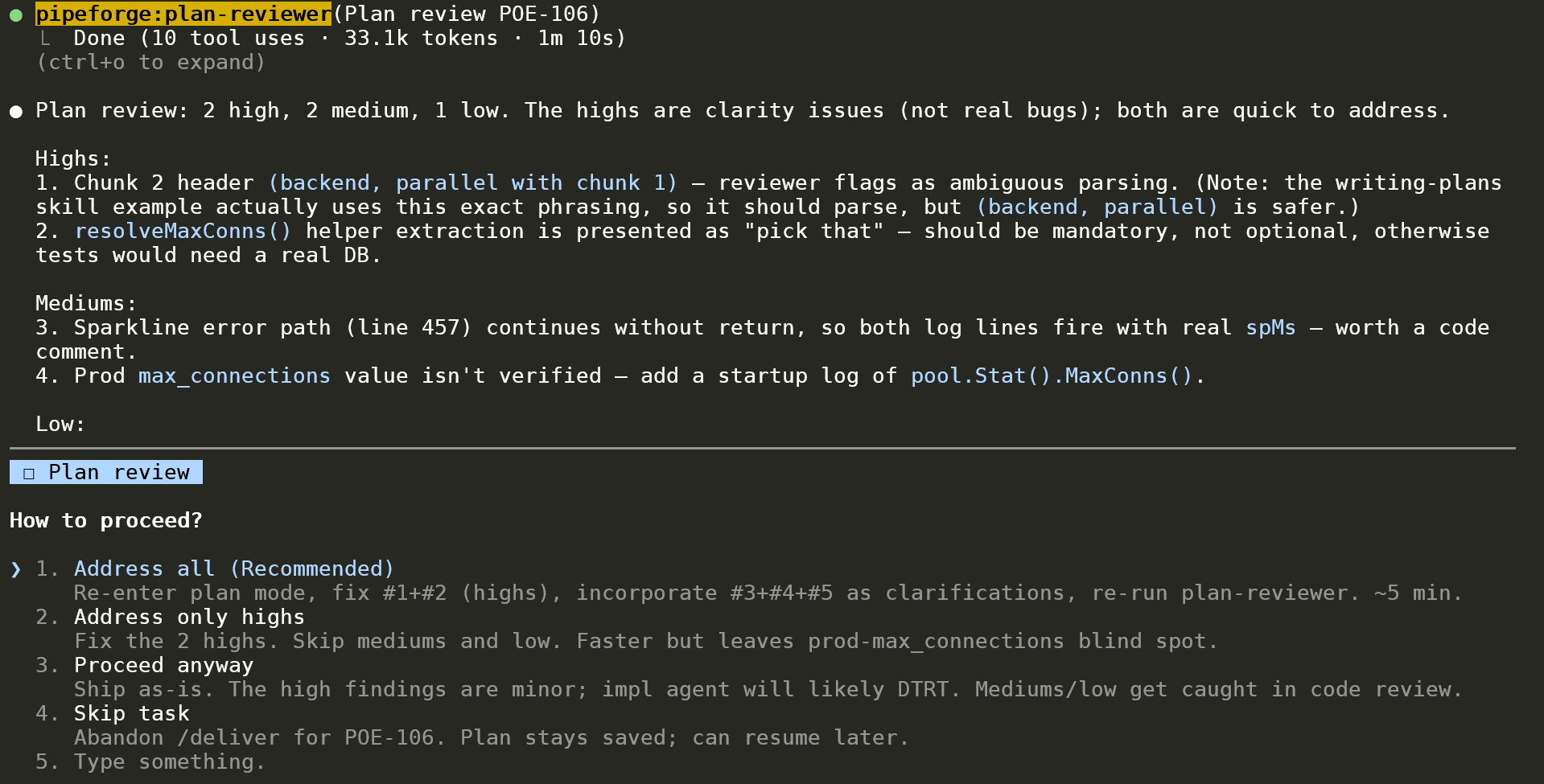
- Plan: a plan reviewer looks for gaps, edge cases and missed business rules.
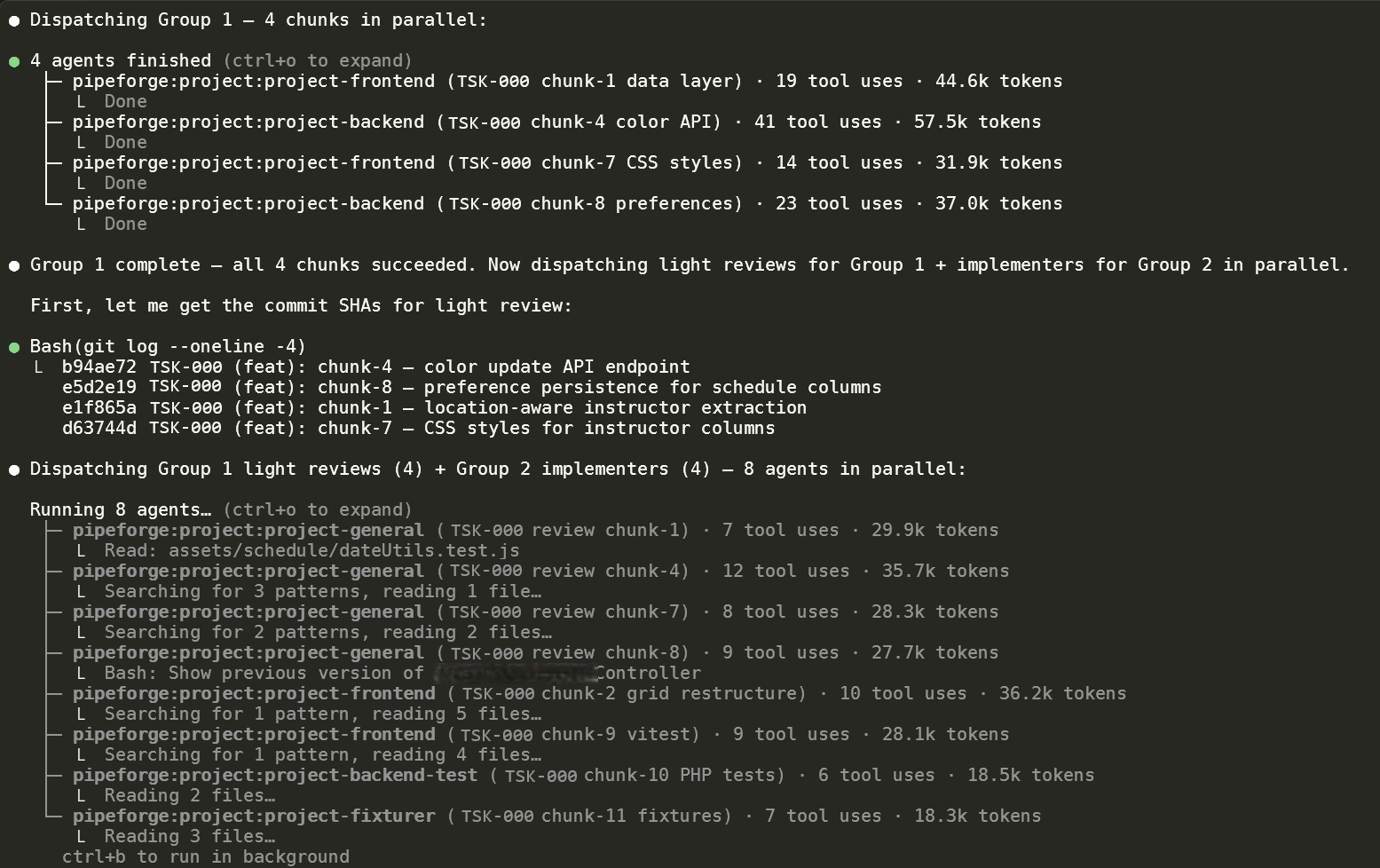
- Build: tests after every step. Each work item gets an independent reviewer, and a fresh re-check after fixes.
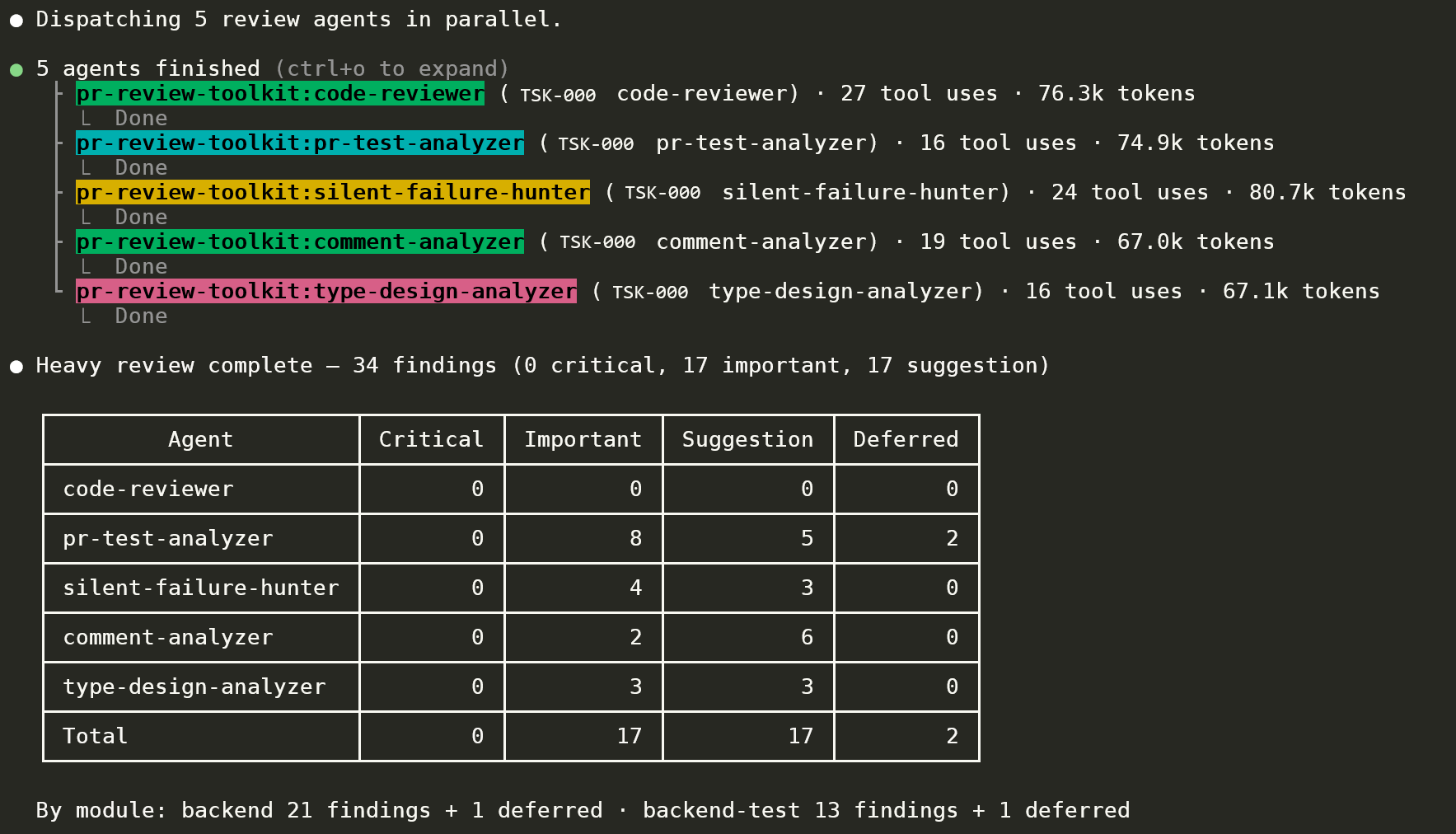
- Branch: code reviewers picked by what changed, security if switched on. Findings go into an automatic fix loop.
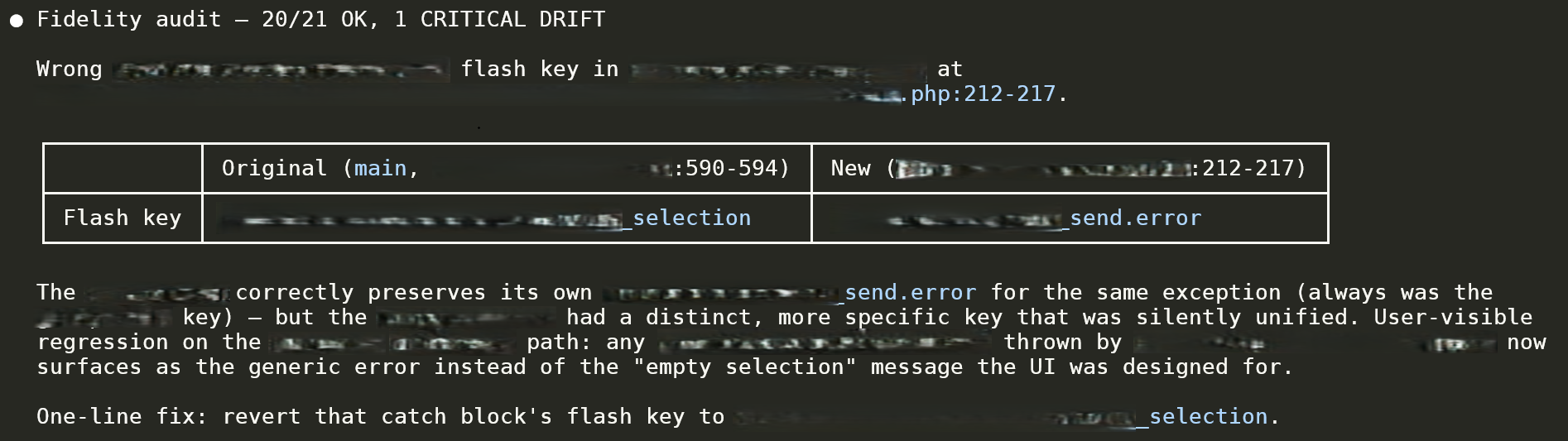
- Before merge: a delivery audit (did it do what was asked?), a fidelity audit when code was moved or split, then green CI.
- Pipeforge's own instructions: every rule change in its skills and agents gets a fidelity audit and a prompt-logic audit in parallel, each blind to the other.
I added the fidelity auditor after an AI silently cut a 491-line spec to 122 lines.
Pipeline walkthrough
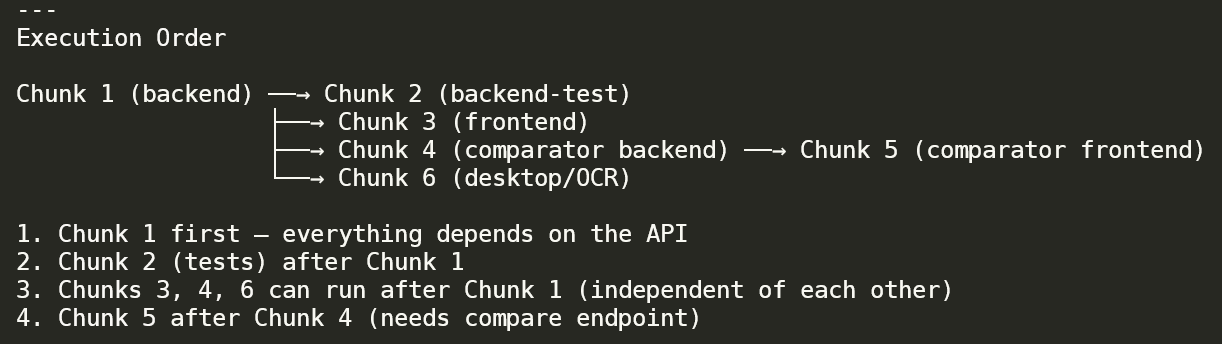
The screenshots below show the pipeline's stages on real runs.
Public tracker IDs (POE-###) stay visible. Private ones are replaced with [TSK-000].
Knowledge base
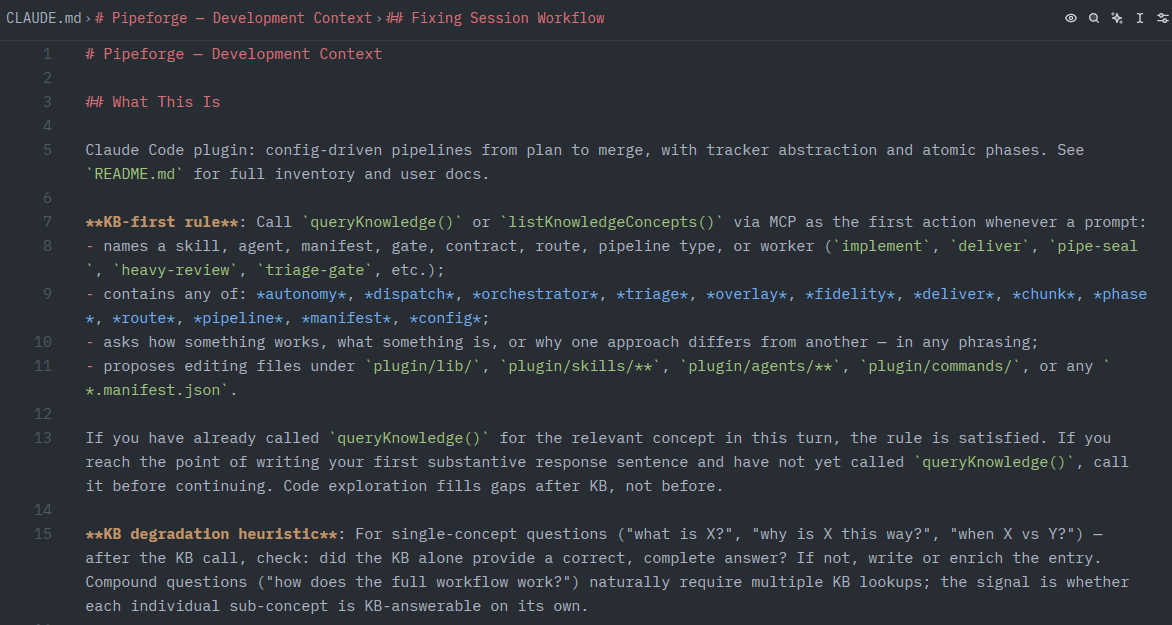
Pipeforge's own design decisions go into a knowledge base, each with its rationale, rejected alternatives and source files. It exists so I stop re-explaining why something works the way it does.